

Have you ever wondered why certain websites in the dental industry attract more patients to their practice? The solution is in knowing human thinking, feeling, and decision-making online. In addition to keyword optimisation, backlink building, and technical optimisation, there are also psychological elements to consider in dental SEO. Although keywords, backlinks, and technical optimisation are crucial in dental SEO strategies, the psychological aspects of patients’ behaviour are important.
Neuroscience is the study of how the brain receives, responds to emotions, forms trust, and acts. Dental practices can produce content, a website, and marketing campaigns that resonate with prospective patients. This increased insight into patient psychology can assist practices in better engaging their patient base, fostering trust, and enabling more individuals to choose their practice.
In this guide, you will get to know how neuroscience affects patient search behaviour and how you can leverage neuroscience to develop better dental SEO strategies.
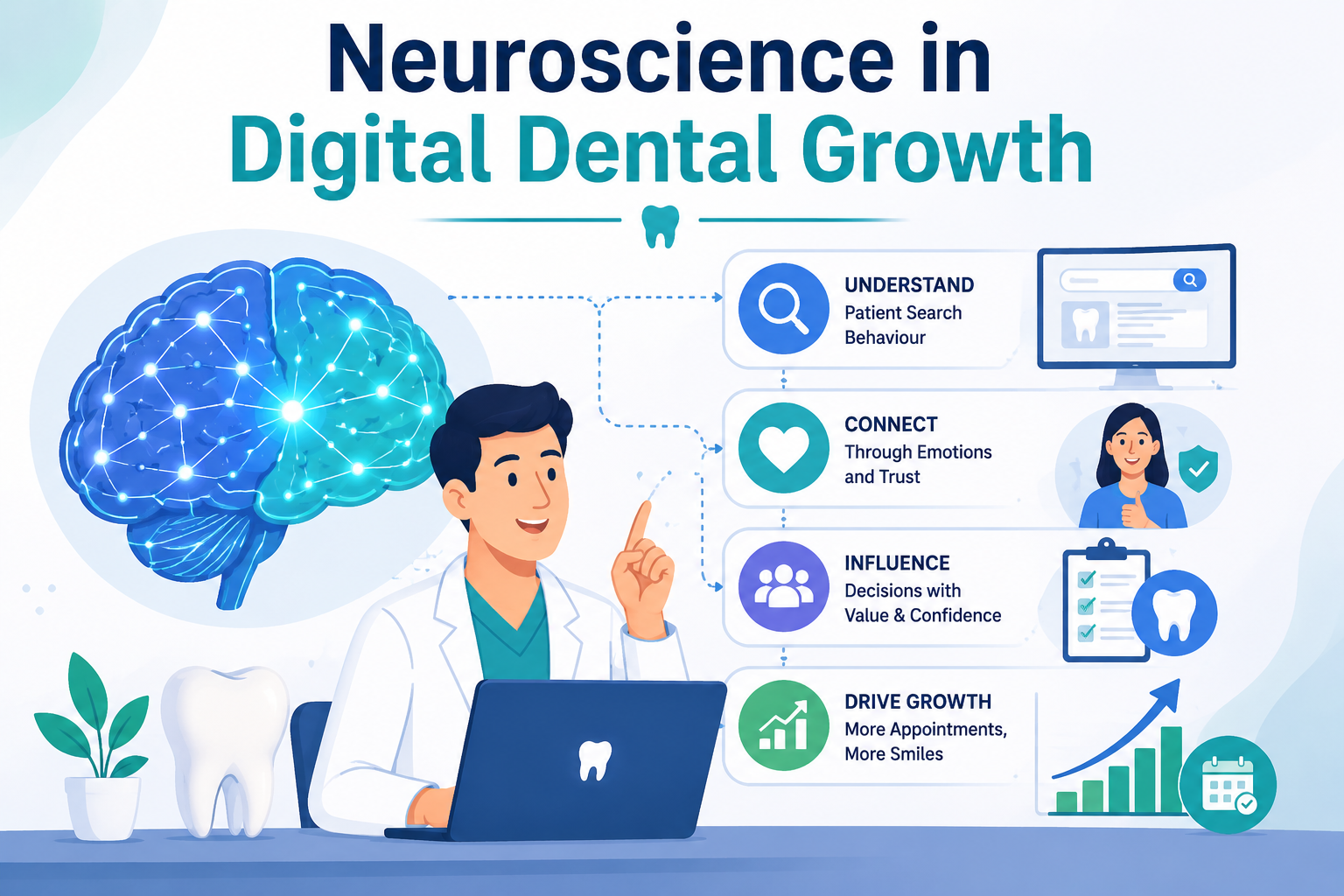
Neuroscience in Digital Dental Growth
Neuroscience is the science of information messaging, emotional responses, trust formation, and decision-making in the human brain. In digital marketing, these insights can be valuable for understanding the factors that drive user behaviour and the motivations that drive potential customers to take action. Neuroscience offers valuable insights for dental practices in patients’ search, assessment of dental providers, and decisions regarding appointment schedules.
Patients think about comparisons of treatment options, costs, and qualifications, but ultimately they are drawn to the surgeon by feelings of trust, comfort, safety, and confidence.
Building Trust Through Neuroscience Principles
In the health care context, trust is one of the key elements in marketing. Every single instant, the human brain, service, or website determines if they are safe and credible or not. Several factors can build trust for dental websites.
Professional Credentials
The person visiting the doctor expects that they will receive special handling. Credibility is established when you can show off your qualifications, education, award(s), and associate membership.
Patient Testimonials
Social proof offers psychological proof, as people turn to others for info when making choices. If other real patients testify to favourable accounts, patients are more likely to select the same provider.
Transparent Information
The websites for dental practices should be informative and should explain the treatment options, their costs, and appointment details. Being transparent decreases uncertainty and increases feelings of comfort for patients.
Consistent Branding
The professional design, quality pictures, and consistent messaging add to their trustworthiness. Stale or badly maintained websites can raise scepticism among visitors.
Read Also: SEO vs Google Ads for Dental Practices in the UK
Psychology of Search Engine Clicks
Users in a search engine land on the search engine results page.
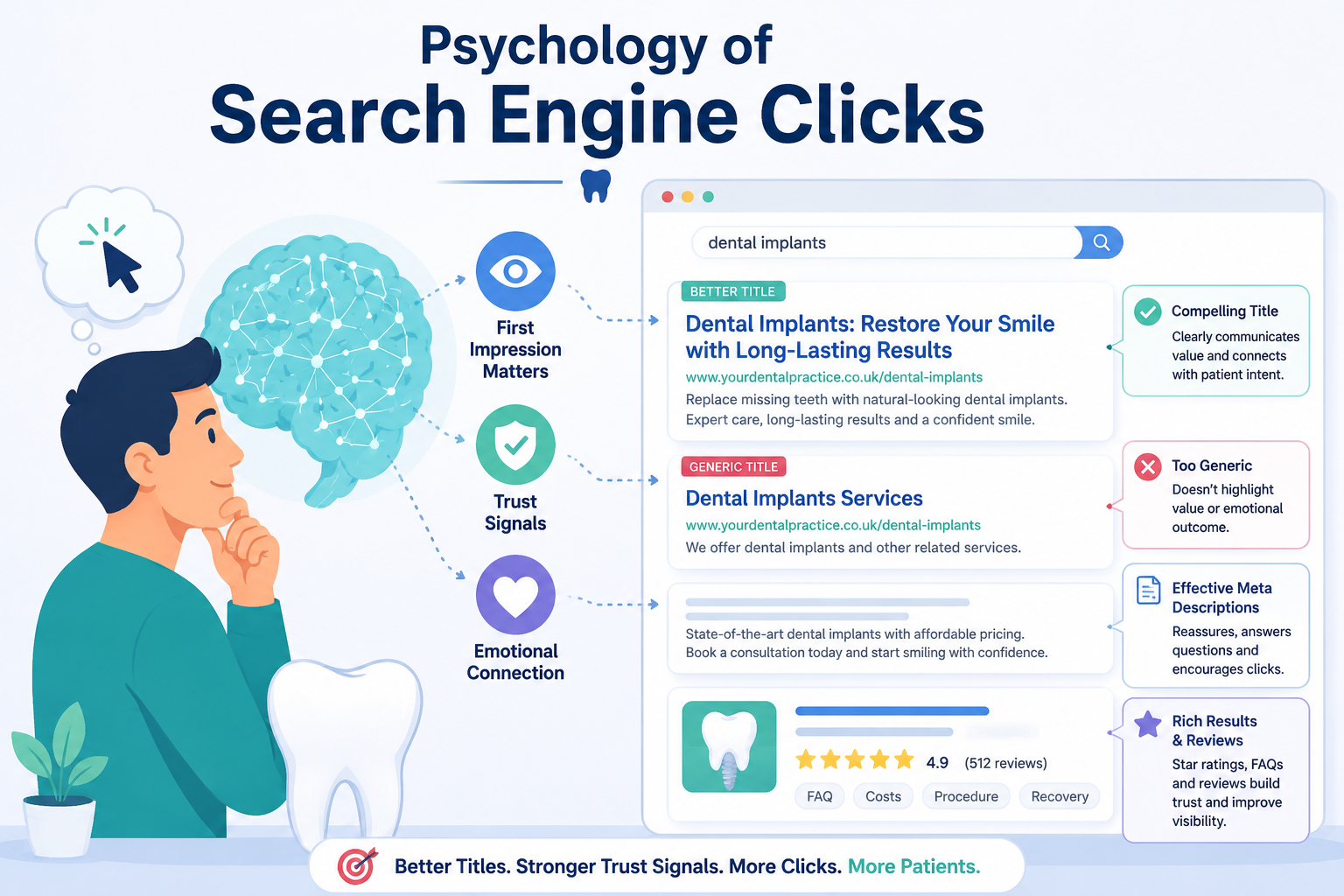
In this phase, the brain rapidly decides what it thinks is relevant or what is trustworthy.
Compelling Titles
When users visit a page, the page title is usually the first to come to their attention. The goal of the goal is to have a title that conveys meaning and value that can be understood by the reader, but also satisfies the intent of the patient seeking this website.
For example:
Generic Title:
Dental Implants Services
Better Title:
Dental Implants: Restore Your Smile with Long-Lasting Results
The second is related to the emotional end patient desires to get.
Effective Meta Descriptions
The other factor influencing clicks is the inclusion of keywords in a Meta description. They need to calm down the users and try to solve their problems, as well as make them happy and raise discussions about the product.
Rich Results and Reviews
Star ratings, FAQs, and other search improvements make websites pop off the pages and convey more trust-building signals before they’re ever visited.

User Experience as a Neuroscience-Based SEO Strategy
Search engines increasingly reward websites that provide positive user experiences.
The principles of UX and neuroscience go hand-in-hand, and many best practices in UX are directly influenced by them.
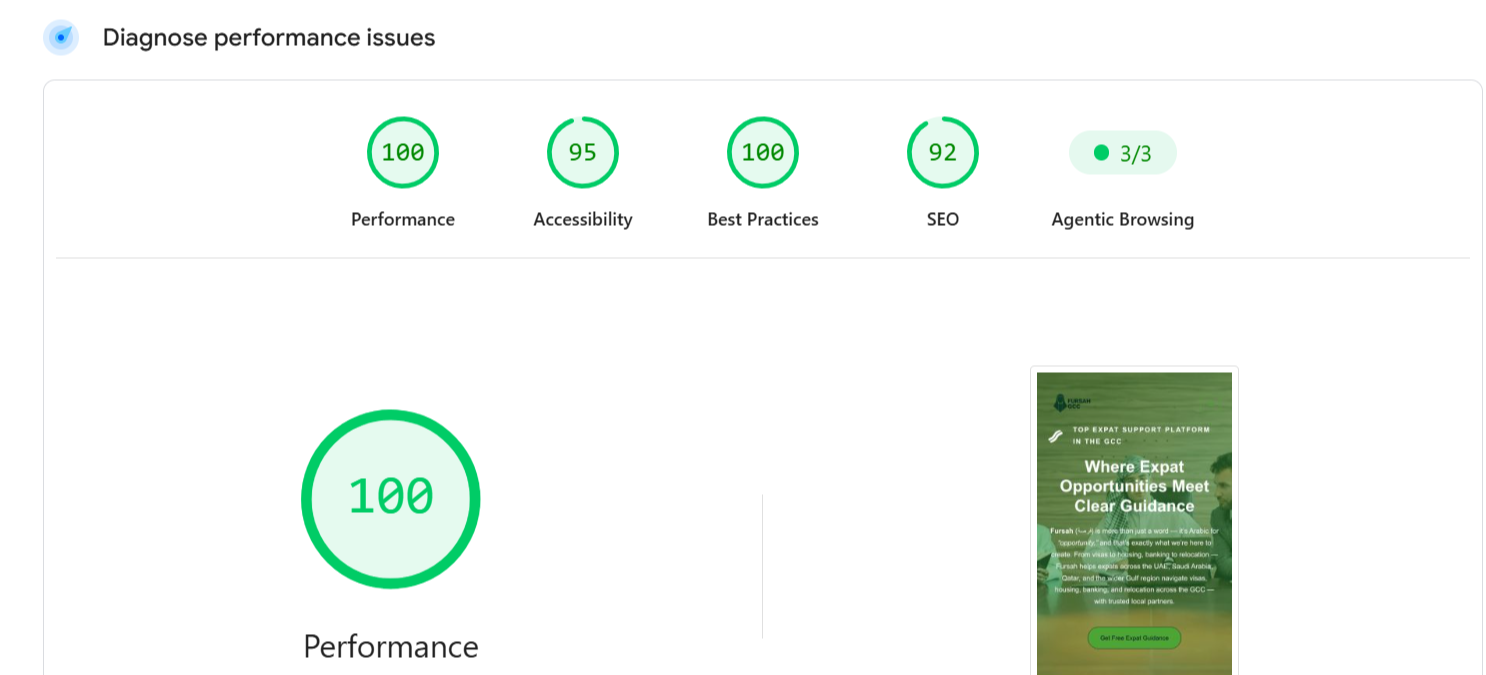
Fast Loading Speed
Long wait times to load pages aren’t preferred by users. Japanese firms can suffer from reduced engagement and higher bounce rates as a result of delays.
Mobile-Friendly Design
A significant amount of dental searches now take place using the mobile platform. Responsive design makes sure that information can be readily accessed, regardless of the screen size.
Clear Navigation
A visitor shouldn’t have to be befuddled about how to be treated, what to anticipate from the contact, or when to set up an appointment.
Easy Appointment Booking
Smoothing the booking process will result in more conversions and satisfied customers.
Local SEO and Patient Psychology
Local SEO is especially vital for the dental industry, as most patients are looking for a dental practice in their community.
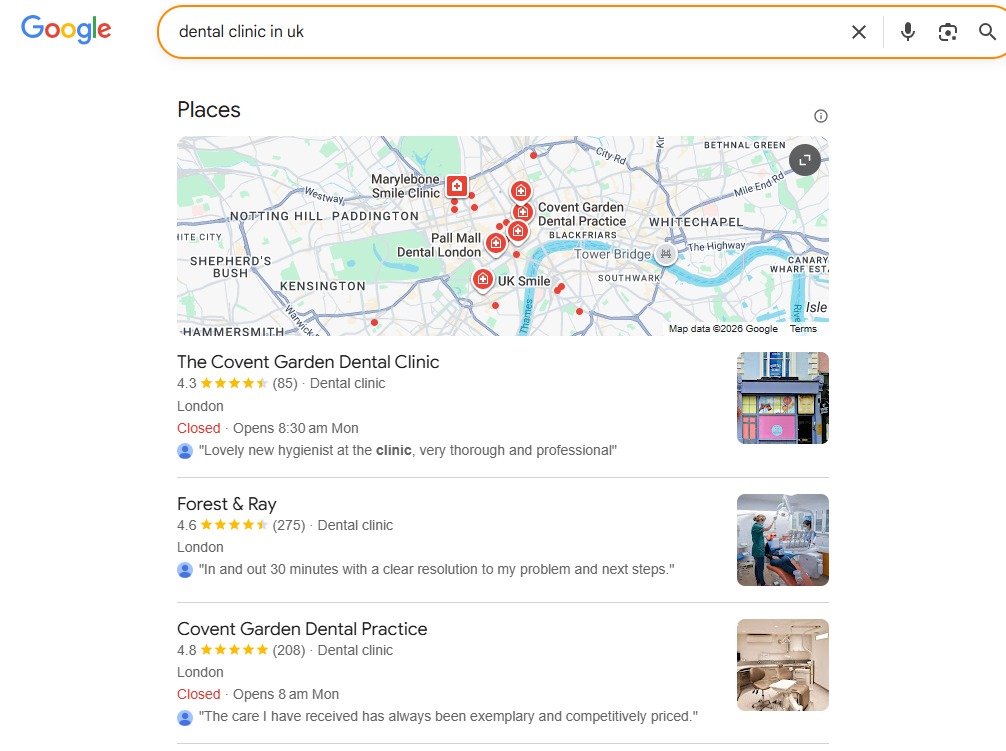
When evaluating local businesses, users often focus on:
- Star ratings
- Number of reviews
- Photos
- Proximity to their location
- Brand familiarity
It’s important to have an optimised Google Business Profile, favourable reviews, and localised facts in play to affect patient choice.
Frequently Asked Questions (FAQs)
What are search engine clicks about?
It is an explanation of how and why one user and not the other.
What’s the point of the SEO title?
They attract attention and encourage users to click.
Do meta descriptions affect clicks?
Yes, they help users understand the page before visiting.
What are the trust signals in SEO?
The brand’s credibility, FAQs, reviews, and ratings.
What role do emotions play in the clicks?
Trust and confidence are emotions that impact decisions made by users.
Read Also: Why Most Dental Websites Fail to Rank on Google
Final Words
In terms of dental SEO strategies, the neuroscience aspect is primarily about gaining insight into patient behaviour, their decision-making process, their trust-building, and their search intent. With a better understanding of neuroscience, dentists can design content for patients, enhance the content experience of the website, enhance the effectiveness of trust signals, optimise local SEO, and tackle the emotional nature that impacts treatment choices. These enhancements help draw in skilful visitors, improve patient involvement, and boost the number of appointments scheduled.
The dental field is evolving, with more and more businesses becoming innovative in their strategies, and a fusion of neuroscience and proven dental SEO could make all the difference.