



Are your efforts paying off in terms of success on your dental website?
Numerous dental offices choose to implement dental SEO because they want to be found more easily for their services on Google, to get more local patients and to boost their appointment bookings. Being on the first page of the search results isn’t always a good indicator of successful SEO. Without measuring these Key Performance Indicators (KPIs), you won’t understand your website’s performance and whether it generates real business results, sales leads and qualified leads. Using KPIs with data will allow you to have a clear view of the SEO performance. They enable you to track results like organic traffic, keyword ranking, local visibility, patient enquiries, phone calls, conversion rates, and revenue generated as a result of organic search.
In this detailed guide, I’ll share the most crucial Key Performance Indicators (KPIs) that are essential for dental SEO success and dive into the reasons behind each KPI’s significance.
What Are Key Performance Indicators (KPIs) in Dental SEO?
Key Performance Indicators (KPIs) are metrics which can be measured to gauge the effectiveness of dental SEO. They tell you if your website is working to be more visible in search engines, and if they are bringing in relevant local patients and if they are bringing in patients who are booking appointments or calling your practice.
Instead of working out a system of assumptions, KPIs give you an actual answer to gauge how well you’re doing with your SEO and what changes to make.
KPIs can address some of the most critical questions, like:
- Do you have a growingly organic website traffic?
- Does the list of keywords you want your dental site to rank for improve on Google?
- Do your Google Business Profile get more local patients?
- Are there more people calling your clinic or scheduling appointments?
- Do you think your SEO efforts are worth the investment (ROI)?
With this consistent visibility, marketers can ensure that their website keeps performing well; they can find out what they have to leverage and correct any performance challenges before they can have an impact, all while making data-driven decisions.
KPI #1 – Organic Traffic
People who normally discover your dental website without having to pay for advertising, consequently, the initial part of the names that will show up on your web visitors report should not be included in the Paid traffic column.
Why It Matters
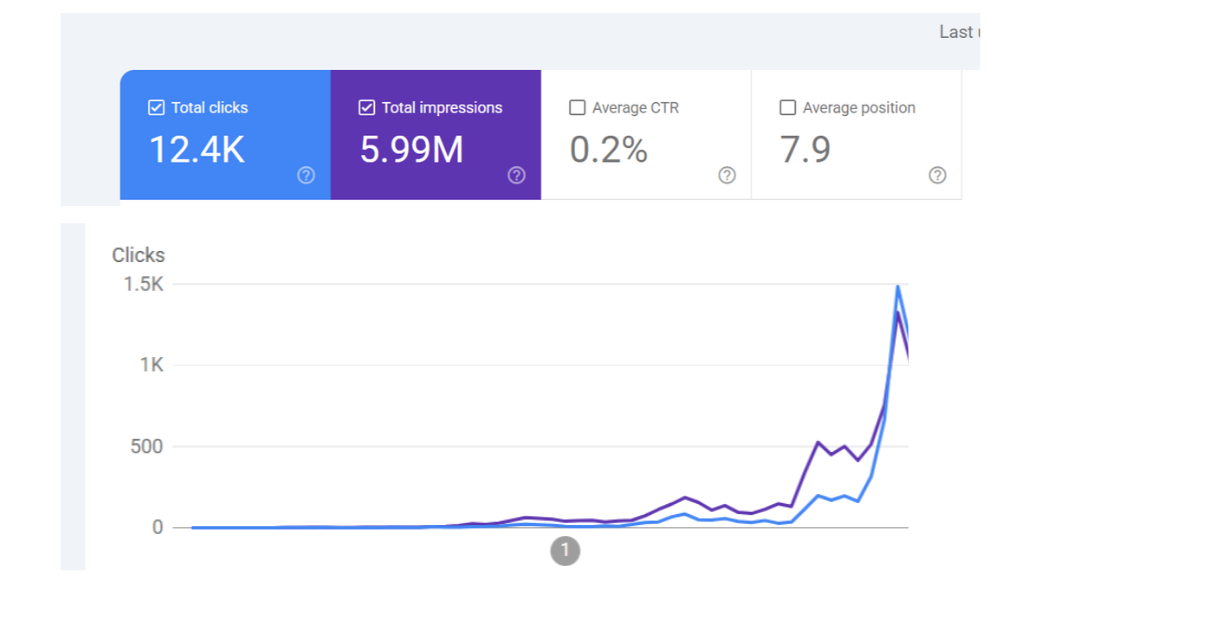
One of the best metrics for tracking the success of your SEO efforts is the number of visitors that are coming through naturally from search engines.
Quality is more crucial than quantity, however. It is better to have high-quality visitors who are focused on your specific topics than to get tons of visitors who are not.
How to Measure It
Track organic traffic using:
Monitor:
- Monthly users
- Landing pages
- Organic sessions
- Geographic location
- Device performance
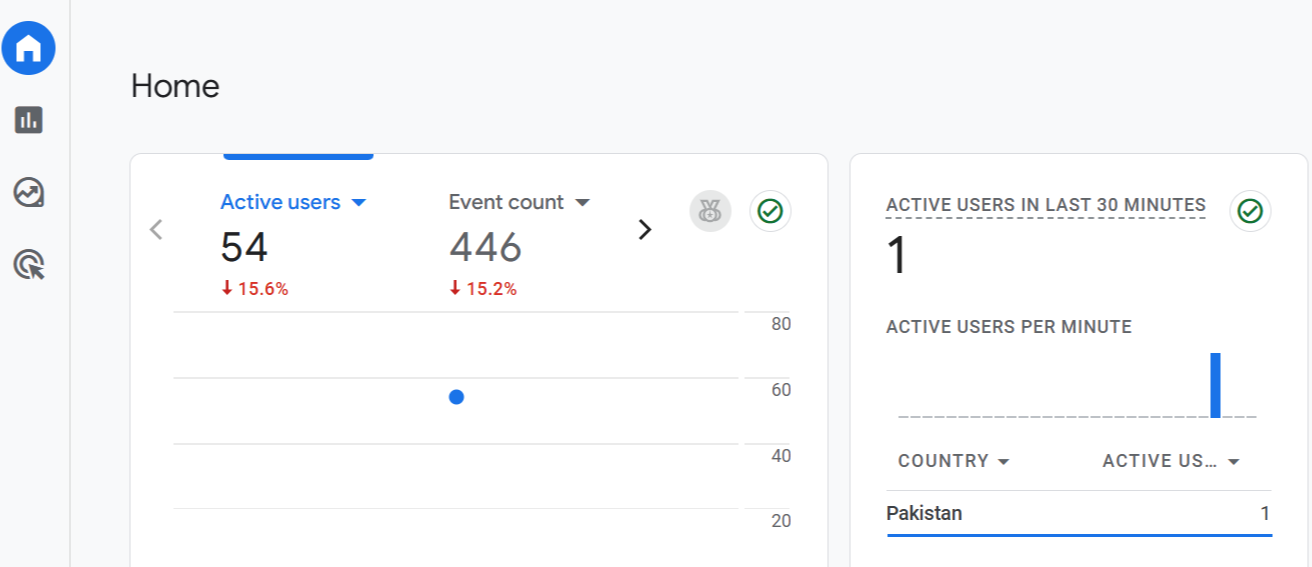
Best Tools
How to Improve
- Publish comprehensive treatment pages.
- Optimise pages for local intent.
- Improve internal linking.
- Refresh outdated content.
- Build authoritative backlinks.
- Improve page speed and mobile usability.
KPI #2 – Local Keyword Rankings
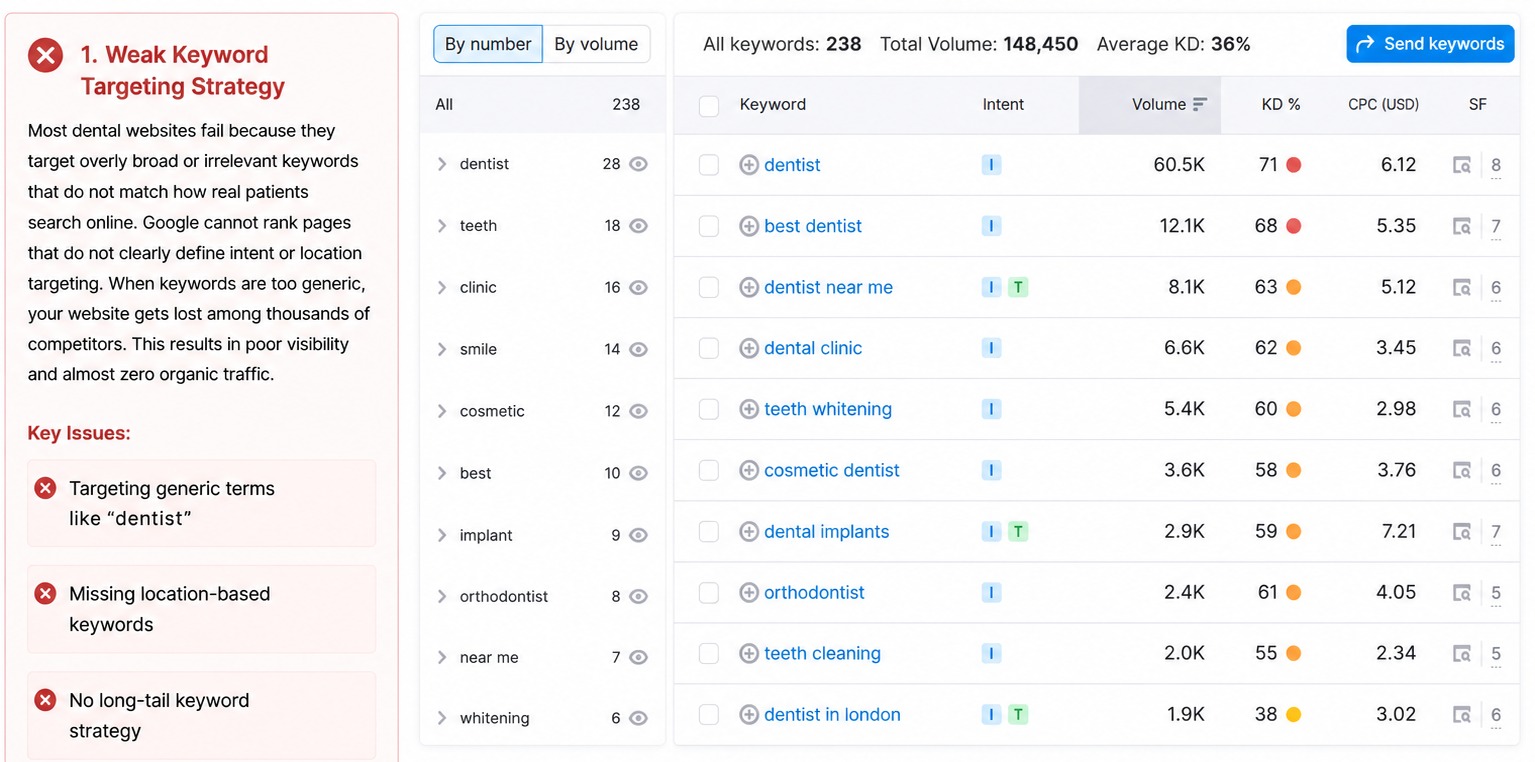
Local keyword rankings are based on where your practice ranks for location-specific queries like:
- Dentist in Leeds
- Emergency dentist Liverpool
- Invisalign Birmingham
Why It Matters
There are a lot of patients looking for a dental service near them. Higher rankings in the local search results will boost your probability of obtaining new patients.
How to Measure It
Track:
- Position for priority keywords
- Google Maps rankings
- Local pack visibility
- Changes over time
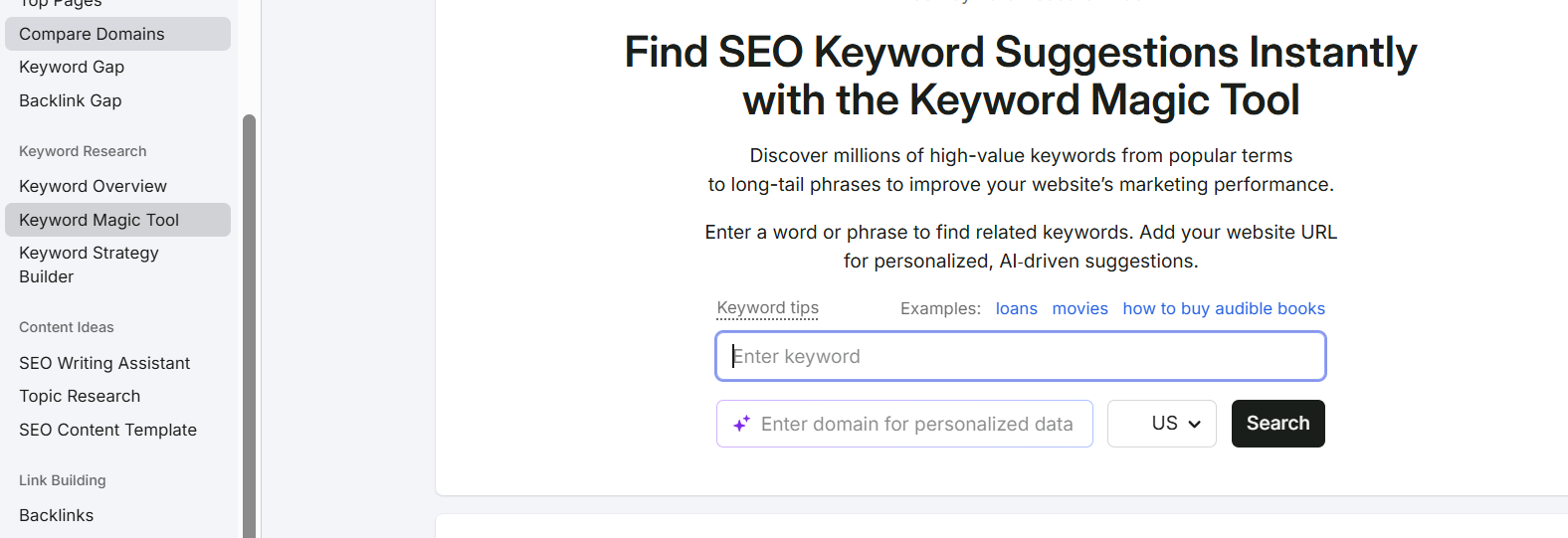
Best Tools
- Google Search Console
- BrightLocal
- Semrush Position Tracking
- Ahrefs Rank Tracker
How to Improve
- Optimise your Google Business Profile.
- Build location-specific landing pages.
- Encourage genuine patient reviews.
- Strengthen local citations.
- Add local business schema.
KPI #3 – Google Business Profile Performance
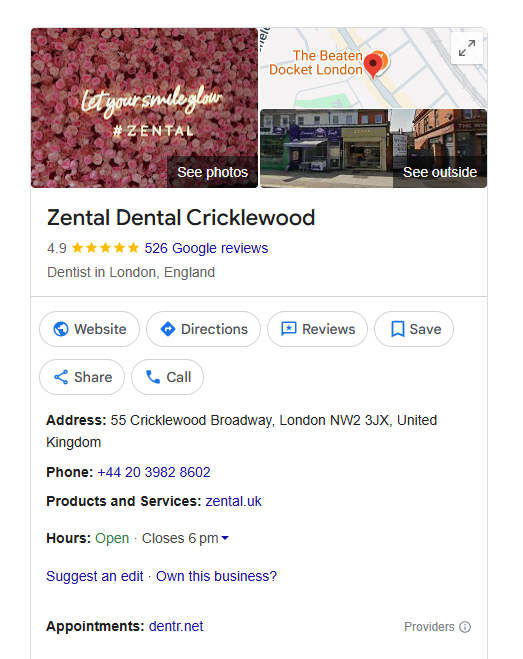
Google Business Profile performance can be defined by how often your practice is showing up in local search and Google Maps, as well as how it’s being interacted with by users.
Why It Matters
Your Google Business Profile is often the first impression that patients have of your healthcare practice in any local search. If your product or service performs well, you will get calls before they even click on your website, directing Internet users to your website, and enquiries about appointments.
How to Measure It
Review metrics such as:
- Profile views
- Website clicks
- Phone calls
- Direction requests
- Photo views
- Search queries that triggered your listing
Best Tools
- Google Business Profile Insights
- Google Search Console
- Google Analytics 4
How to Improve
- Having accurate and consistent business information.
- Post quality images on a regular basis.
- Share information on products or special offers.
- Be professional in responding to all reviews.

KPI #4 – Website Conversion Rate
Your web page conversion rate reflects the number of patients who take a beneficial step on your dental website. These are called “conversions” and often relate to scheduling an appointment, filling in an enquiry form, making a phone call to your practice, filling in a live chat on your website, or making a booking via your contact form.
While the number of visits to your website can be measured when using organic traffic, the percentage of people who convert into potential patients can be determined using the conversion rate factor.
Why It Matters
If your site can convert visitors, then you know you have a high conversion rate, and that your website is doing something right.
So, for comparison, let’s say that two dental offices get 1000 monthly organic visitors each:
- Practice A converts 2% of visitors into enquiries (20 leads).
- Practice B converts 6% of visitors into enquiries (60 leads).
Even though both practices get the same amount of traffic, the difference lies in the fact that there are three times as many patients that could be generated to the site for Practice B due to their website’s performance.
Getting more conversions tends to give your company quicker growth than merely the volume of traffic.
Website Conversion Rate Calculator
Your Website Conversion Rate
How to Measure It
Monitor conversions such as:
- Online appointment bookings
- Contact form submissions
- Phone calls
- WhatsApp enquiries (if applicable)
- Live chat conversations
- Email enquiries
Calculate your conversion rate using the following formula:
Conversion Rate = (Conversions ÷ Total Website Visitors) × 100
Track these metrics using:
- Google Analytics 4
- Google Tag Manager
- Call tracking software
- Online booking platform reports
Best Tools
- Google Analytics 4
- Google Tag Manager
- Microsoft Clarity
- CallRail (or similar call-tracking software)
- Dental appointment booking systems
Benchmarks
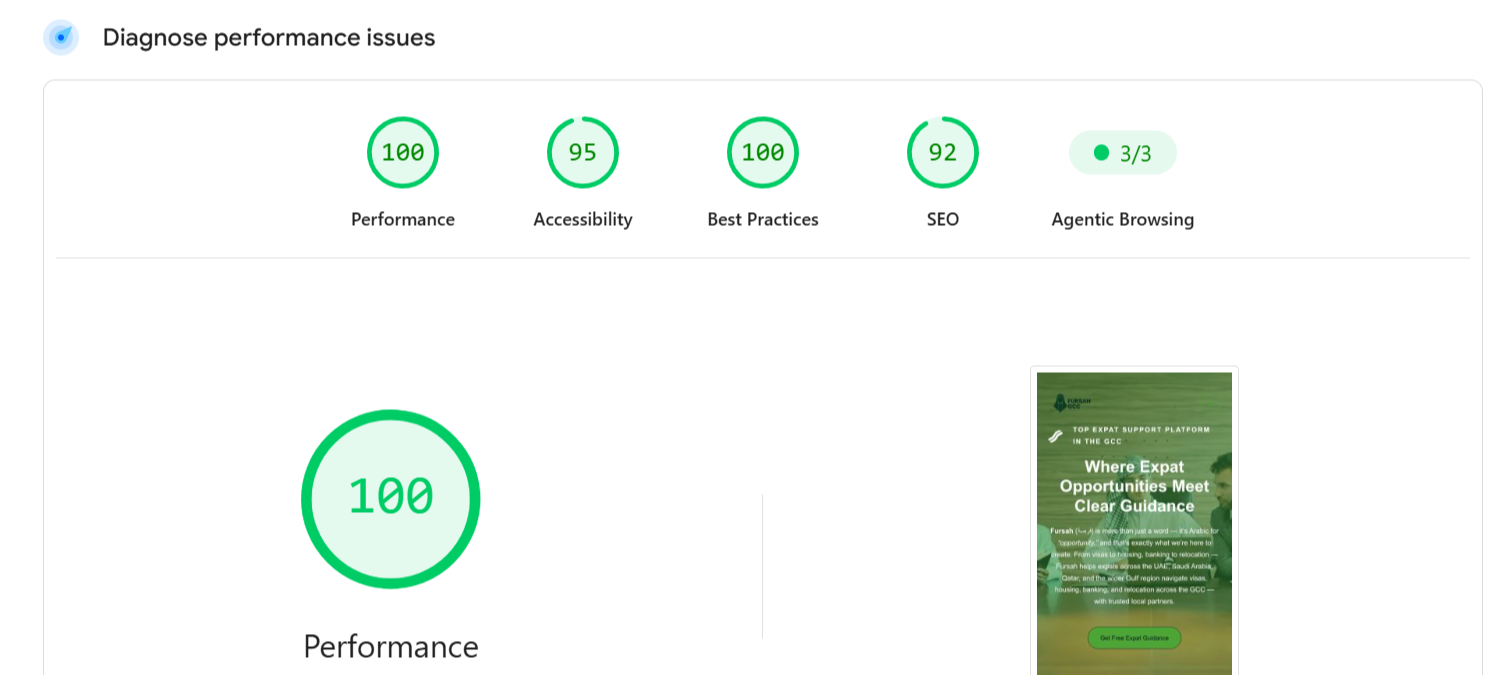
Each treatment has unique conversion rates based on the audience. As a general guide:
| Performance | Conversion Rate |
|---|---|
| Excellent | 7–10% or higher |
| Good | 4–7% |
| Average | 2–4% |
| Needs Improvement | Below 2% |
A benchmark is to consistently get better from one month to the next, not setting a 100% target.
Read Also: SEO Strategies for a New Dental Practice That Actually Work
KPI #5 – Appointment Requests
Requests to appointments track the number of users that visit your site organically and then choose to make an appointment or treatment with you.
This KPI is one of the most important results of dental SEO as it’s directly linked to online visibility and business growth.

Why It Matters
While having a high search ranking is important, it doesn’t make any sense unless it’s resulting in real patient enquiries.
By monitoring requests for appointments, you can decide:
- Which treatment pages are the best performing?
- Which locations generate the most leads?
- Which keywords attract patients ready to book?
How to Measure It
Track:
- Online booking submissions.
- Consultation request forms.
- New patient enquiries.
- Appointment confirmations originating from organic traffic.
Wherever possible, link your enquiries to Google Analytics, so you have accurate statistics of the number of enquiries that come from your booking site.
How to Improve
Generate more appointment requests by:
- Optimising local SEO.
- Adding strong calls to action.
- Displaying transparent pricing where appropriate.
- Highlighting qualifications and experience.
- Answering common patient concerns clearly.
KPI #6 – Phone Calls from Organic Search
There are times when patients prefer to communicate about the dental work immediately before getting treatment. Organic searches are the strongest predictors of success, and calls from organic search are included.
Why It Matters
Particularly for high-value treatments like implants, cosmetic dentistry, orthodontics and emergency appointments, this usually produces enquiries via the telephone rather than online bookings.
Call tracking can help you calculate the actual amount of patient interest you’re creating through your SEO.
How to Measure It
Monitor:
- Calls originating from Google Search.
- Calls from your Google Business Profile.
- Click-to-call actions on mobile devices.
- Call duration.
- Calls converted into appointments.
Best Tools
- Google Business Profile Insights
- Google Analytics 4
- CallRail
- WhatConverts
- Infinity Call Tracking
How to Improve
Increase phone enquiries by:
- Make your phone number easily visible.
- Using click-to-call buttons.
- Making the best of your Google Business Profile.
- Creating pages optimised for high-ranking keywords that deal with treatment.
- Maintaining excellent local reviews.
KPI #7 – Click-Through Rate (CTR)
It means the percentage (CTR) of people who click on your website once they view it in Google’s search results.
The formula is:
CTR = (Clicks ÷ Impressions) × 100
CTR is a way of measuring how appealing and pertinent your search listing is to potential patients.
Why It Matters
Even with a high ranking, if the title or Meta descriptions of your website are not suitable, your website may not get traffic as you would like.
How to Measure It
You can check metrics for Google Search Console, like:
- Impressions.
- Clicks.
- Average position.
- CTR by page.
- CTR by keyword.
Identify the pages that have a lot of impressions and a not-so-strong CTR, since those can be the fastest gains you’re able to achieve.
Best Tools
- Google Search Console
- Google Analytics 4
- Semrush
- Ahrefs
KPI #8 – Backlinks and Referring Domains
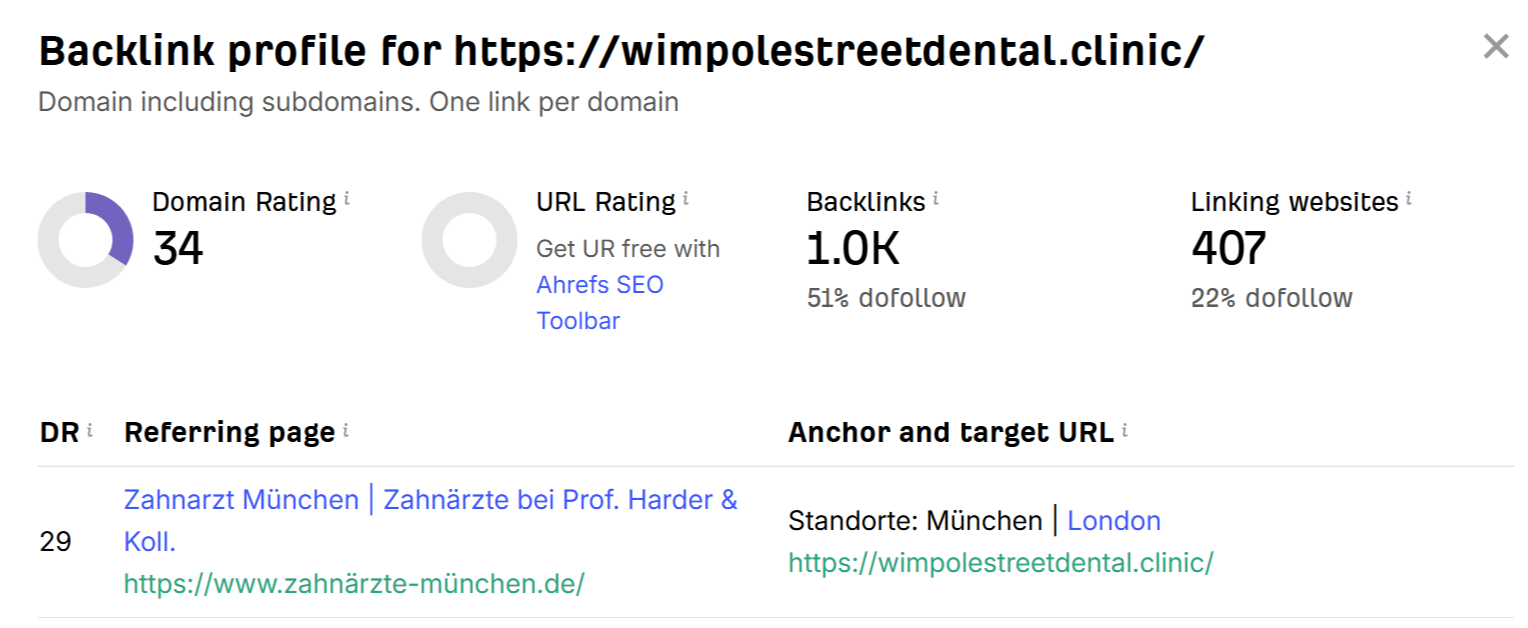
Backlinks are hyperlinks that link other websites back to yours. The number of different websites with referring links is called the referring domains.
Quality backlinks are considered a sign of credibility and trustworthiness by search engines.
Why It Matters
A good authoritative backlink will help enhance the reputation of your site, boost its rankings, and benefit overall SEO capabilities.
Many times, a few good links from a reputable health-related organisation, local news site, university or professional association can be valuable as opposed to hundreds of poor-quality links.
How to Measure It
Track:
- Total backlinks.
- Referring domains.
- Domain quality.
- Anchor text diversity.
- Lost backlinks.
- Newly acquired backlinks.
Best Tools
- Ahrefs
- Semrush
- Majestic
- Moz
- Google Search Console
How to Improve
Earn high-quality backlinks by:
- Publishing original educational content.
- Producing local dental guides.
- Supporting community initiatives.
- Collaborating with local organisations.
- Publication citations, such as in newspapers or magazines.
- Producing informative and authoritative writing on the subject, which other sites link to.
KPI #9 – Core Web Vitals
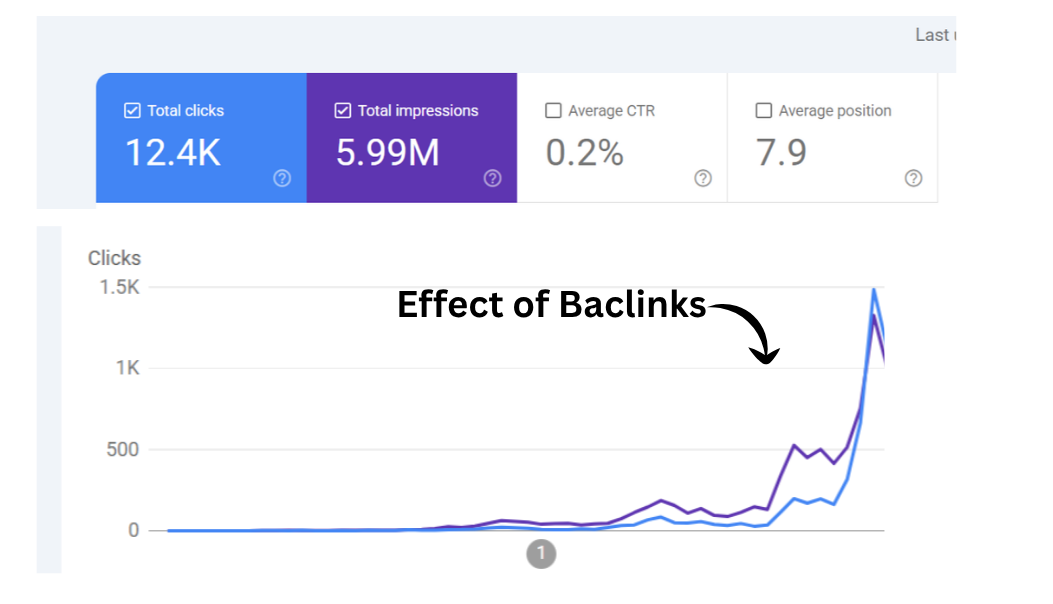
Core Web Vitals are the statistics Google has set up for assessing user experience. These measure the responsiveness of your website, its loading speed and its stability in appearance as it loads.
A quick, dependable website will offer a better experience to your patients and facilitate ongoing SEO results.
Why It Matters
People looking for a dentist require information readily, particularly for emergency procedures.
Slow-loading pages can lead to:
- Higher abandonment rates.
- Lower engagement.
- Fewer appointment bookings.
- Poorer user experience.
Core Web Vitals are just a component of Google’s algorithm, and having them optimised will help with SEO, as well as the user experience.

The Three Core Web Vitals
Largest Contentful Paint (LCP)
Indicates the time it takes to see the main page content.
Target: Less than 2.5 seconds.
Interaction to Next Paint (INP)
Affects the loading speed of the website when clicked or interacted with by the user.
Target: Less than 200 milliseconds.
Cumulative Layout Shift (CLS)
Measures visual stability during page loading.
Target: Less than 0.1.
Best Tools to Track Dental SEO KPIs
Accurate measurement of seo performance is much easier when using the proper tools.
| Tool | Primary Purpose |
|---|---|
| Google Analytics 4 | Organic traffic, conversions, engagement |
| Google Search Console | Keywords, impressions, CTR, indexing |
| Google Business Profile Insights | Local visibility and patient interactions |
| Google Tag Manager | Event tracking |
| Google Looker Studio | SEO reporting dashboards |
| Ahrefs | Backlinks and keyword tracking |
| Semrush | Competitor analysis and rankings |
| Moz Pro | Domain authority and local SEO |
| Screaming Frog SEO Spider | Technical SEO audits |
| BrightLocal | Local SEO performance |
| Call Tracking Software | Phone call attribution |
| Microsoft Clarity | User behaviour and heatmaps |
Frequently Asked Questions (FAQs)
1. What are the top indicators (KPIs) for dental SEO?
Dental SEO KPIs are concrete metrics that assess a website’s SEO results. They monitor things such as organic traffic, keyword news, nearby visibility, conversions, requests for appointments, and much more.
2. Which KPI is the most important for dental SEO success?
There’s no one single measurement that can tell you if your SEO works. Organic traffic, conversion rate, appointment booking, phone calls, local search rankings, and revenue from organic search are the most significant.
3. What’s the best time to monitor dental SEO KPIs?
Check monthly on your dental SEO KPIs for growth and trends. Monitor the rankings of your chosen keywords and local SEO stats weekly, then assess your SEO efforts and ROI quarterly.
4. What are the tools I should use to monitor the dental SEO KPIs?
Tools that will come in useful are Google Analytics 4, Google Search Console, Google Business Profile Insights, Ahrefs, Semrush, BrightLocal, and Google Looker Studio.
5. How long does dental SEO take to show results?
Generally, dental SEO will begin working within 3 to 6 months. In competitive markets, it could be 6 – 12 months. Once you’ve got a grasp of how to track progress over time, you will know how to enhance your SEO plan with time.
Read Also: How to Improve Local SEO for Dental Clinics Fast Today
Final Thoughts
The best dentist store doesn’t rely on ranking because they are not measuring its effectiveness in real dollar growth of its business. Setting up the proper KPIs, implementing trustworthy analytics tools and taking remedial action based on performance metrics can make your website as reliable a channel as possible for high-quality patient requests.
Use your KPIs continuously throughout the month, instead of as a monthly report. Check them frequently, tweak your plans on a data bent and keep refining your content, technical SEO, and local efforts.