

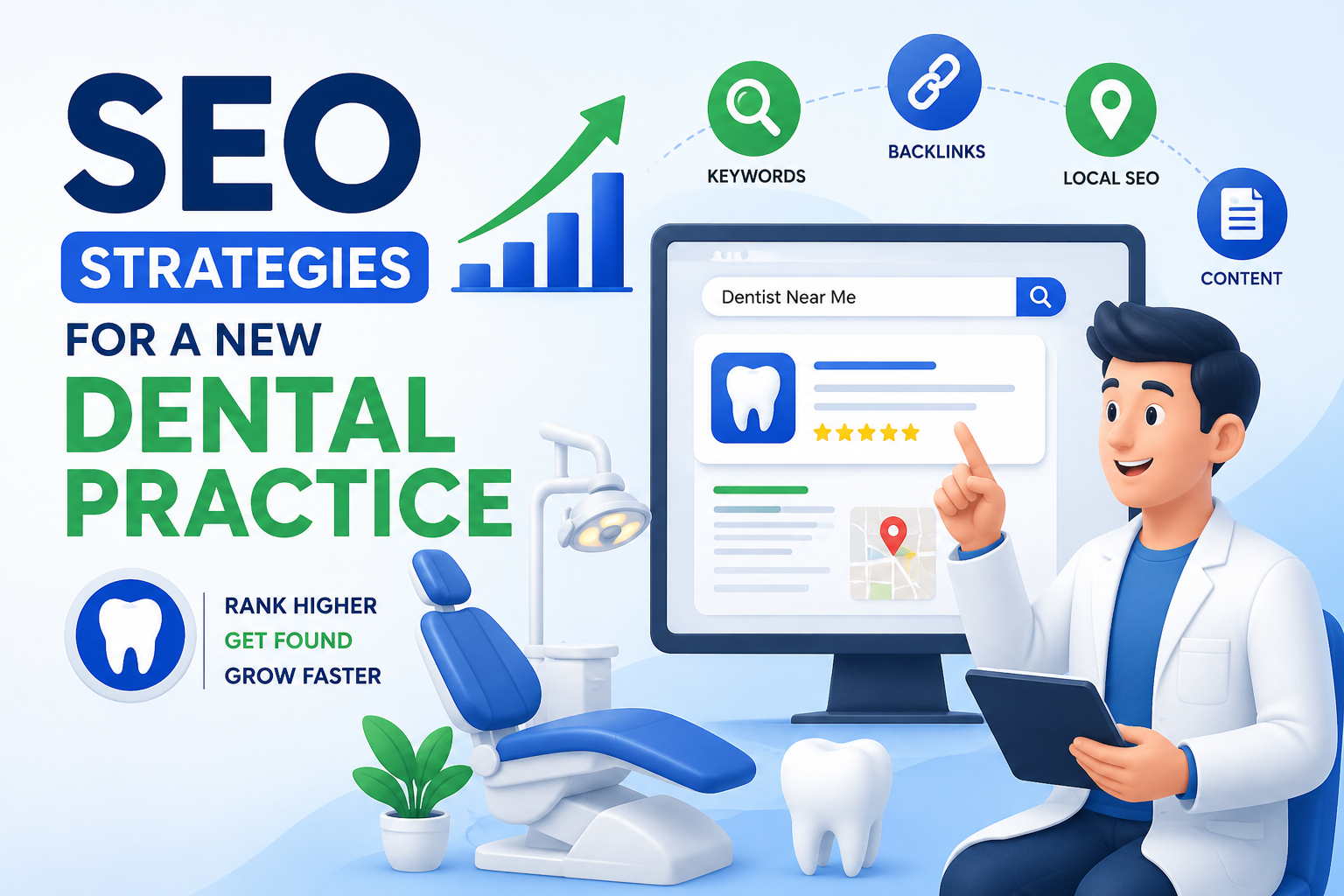
Have you recently started your dental practice and are not sure about how you will be promoted online? You’re not alone. While many new dental practices provide excellent service, they just cannot seem to get the word out about their practice due to poor visibility on Google Search and even Google Maps. These days, individuals investigate online prior to deciding on a dentist, look through a couple of practices, read reviews, and visit websites ahead of making an appointment.
In this guide, you’ll come to know the most crucial SEO strategies for new dental practices, including how to optimise your website for search engines and how to make your Google Business Profile shine.
Why SEO Matters for a New Dental Practice
Healthcare services are increasingly accessed differently over the last 10 years. Most patients today do the research on their own, as opposed to friends or family, and go online to make decisions.
A typical patient journey looks like this:
- Search for a dentist on Google.
- Check out the local search results and compare clinics.
- Read patient reviews.
- Visit several websites.
- Research and review service offerings, pricing and hours.
- Make an appointment with the practice that you feel most comfortable with.
How Google Ranks Dental Practices
Google checks hundreds of ranking factors and decides which ranking strategies are the most relevant and credible. Knowing about these ranking factors will enable you to prioritise where you need to spend your efforts.
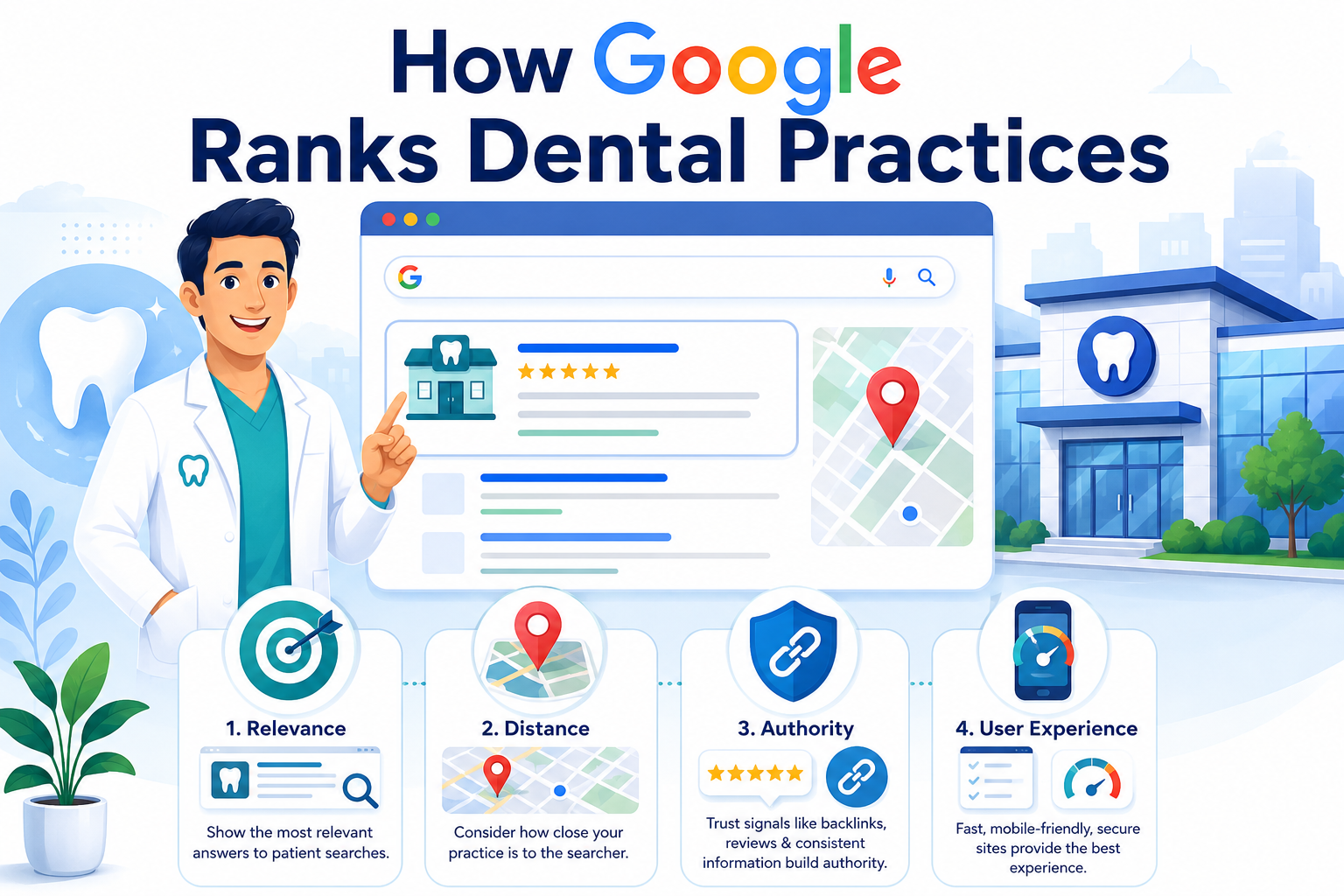
1. Relevance
Google wants to serve pages that answer its users’ searches.
For example:
- A web page that contains a page featuring Invisalign treatment is more likely to produce Google rankings for “Invisalign dentist” than a simple home page.
- For example, an elaborate page covering emergency dentistry is more likely to show up in pages generated by searching for emergency dentistry than an all-encompassing services page.
The more relevant your content is to a patient’s search intent, the clearer it is.
How to improve relevance
- For each treatment, make a separate page.
- Use natural words for titles or headings.
- Address typical patient concerns.
- Use location-specific information when relevant.
2. Distance
Google’s local search results take into account proximity to the person searching when based on your practice location.
Although the physical location is not something you can change, you can reinforce it by:
- Optimising your Google Business Profile.
- Having your clinic’s address written in the same way throughout the web.
- Building web services for particular locations.
- It is advisable to make natural use of local features and places within your content.
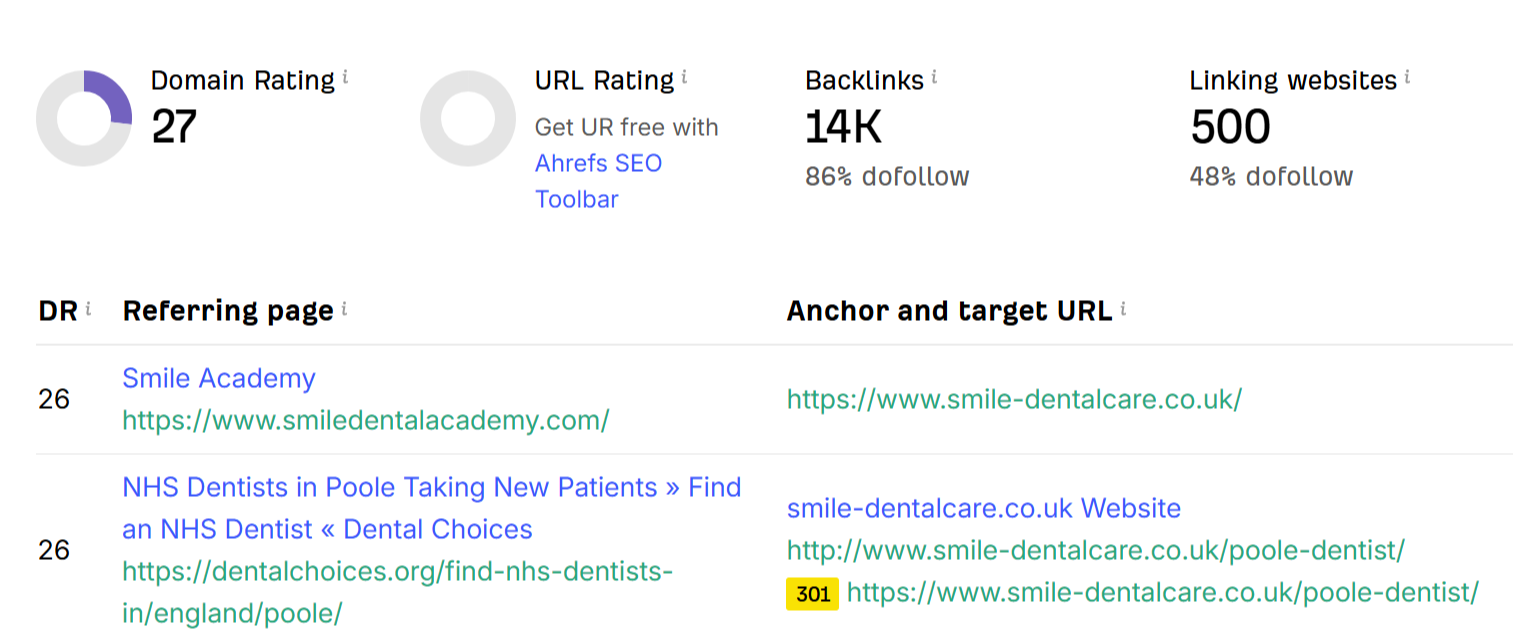
3. Authority
Trustworthiness is the aspect of your website that makes it look authoritative.
The trust Google instils includes cues like:
- High-quality backlinks.
- Positive patient reviews.
- Consistent business information.
- Helpful educational content.
- Mentions from reputable healthcare websites.
The new practices only begin with limited power, but sharing useful information and actually receiving recognition from locals slowly builds up a positive online reputation.
4. User Experience
Even excellent content won’t perform well if visitors struggle to use your website.
Google considers user experience to be influenced by elements such as:
- Mobile responsiveness.
- Fast loading speeds.
- Secure HTTPS connection.
- Clear navigation.
- Easy-to-read content.
- Minimal intrusive pop-ups.
In addition to having a positive effect on rankings, a positive user experience also helps to get people through the door as patients.
Essential SEO Strategies for a New Dental Practice
1. Build a Fast, Secure, and Mobile-Friendly Website
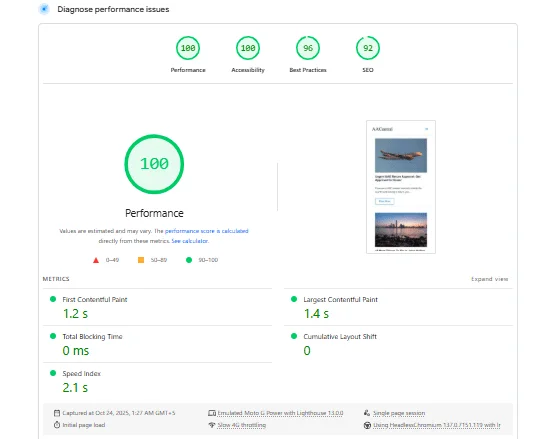
Develop a website that’s fast, secure, tablet- and mobile-responsive. No matter how good the content is, if the site is slow, navigational cumbersome and not mobile-friendly, it will not be as successful.
Many dental searches are now conducted on a smartphone, so your website should make it very easy to view on all phones.
Best Practices
- Use a responsive website design.
- Ensure pages load in under three seconds.
- Compress and optimise images.
- Use HTTPS security.
- Keep navigation simple and intuitive.
- Make appointment booking easy.
- Include click-to-call buttons for mobile users.
Why It Matters
An optimised, easy-to-use website increases satisfaction, boosts conversions, and increases your search engine crawl of and ranking for your pages.
Read Also: How Patients Search for Dentists Online in 2026
2. Optimise Your Google Business Profile (GBP)
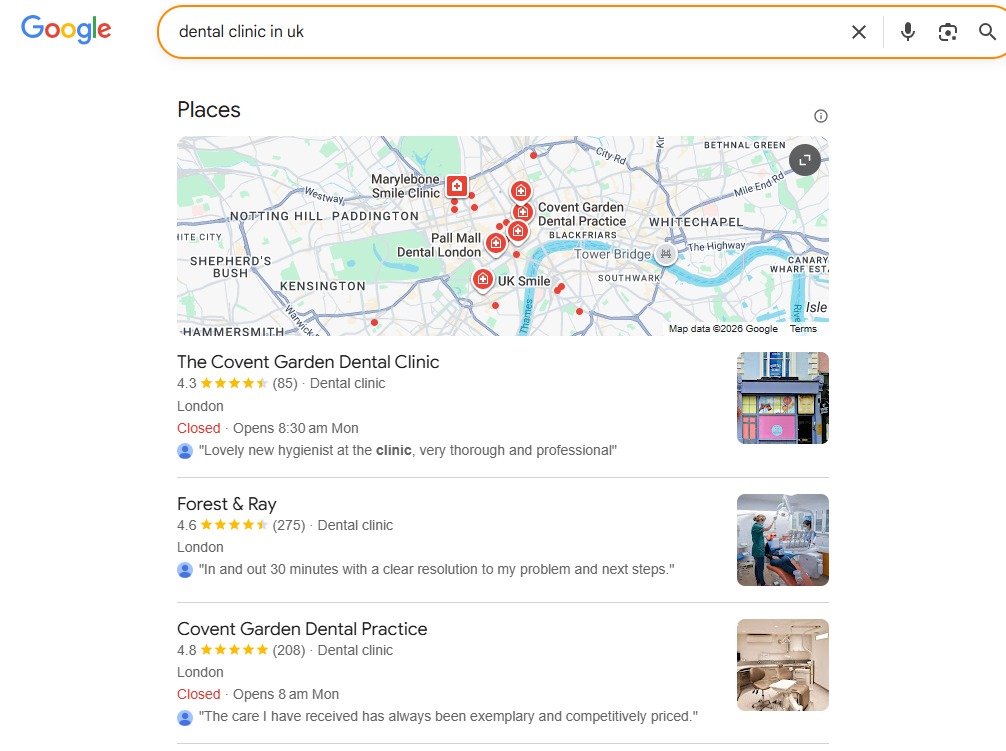
If you’re a local business, such as a dentist’s office, your Google Business Profile (previously Google My Business) is one of the greatest SEO instruments that are available. Your practice needs to show up in Google Search, Google Maps, and the Local Pack (the top part of a local search that shows businesses nearby).
Whenever somebody queries about:
- Dentist near me
- Emergency dentist in [City]
- Cosmetic dentist nearby
When your Google Business Profile is optimised, you are more likely to be seen in these coveted spots.
3. Perform Comprehensive Local Keyword Research
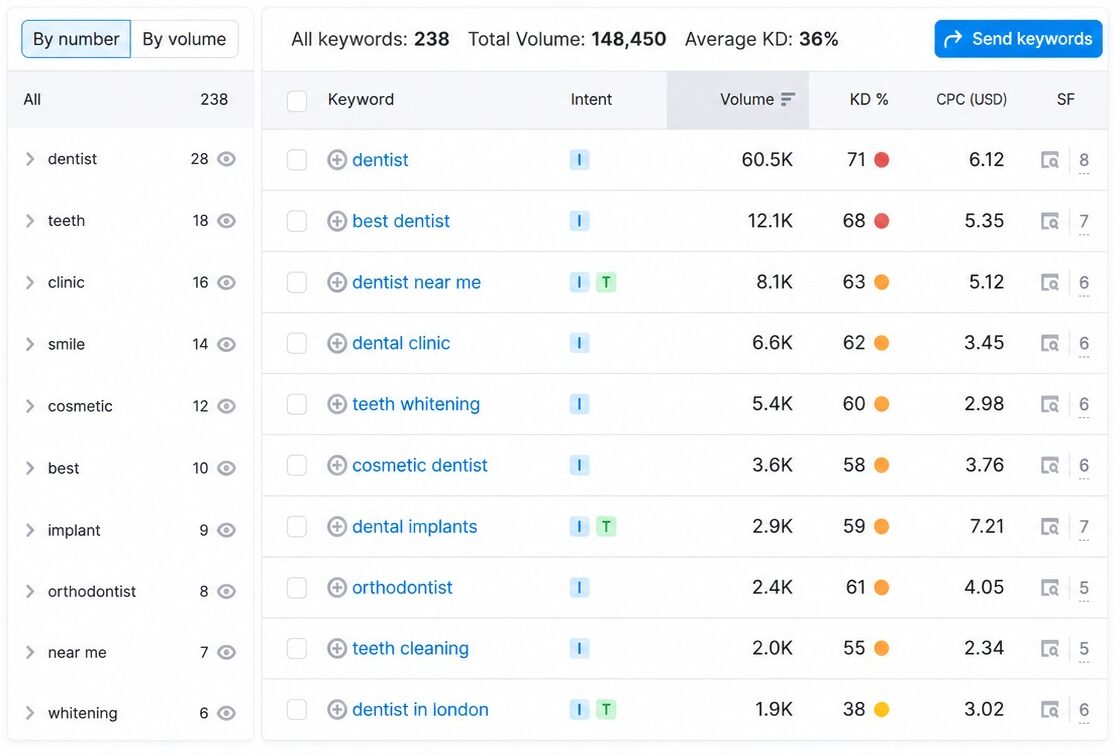
The research of the keywords will help you to understand what kind of searches potential patients are making. Tackle locally relevant and service-specific keywords that align with your services instead of using generic keywords such as ‘dentist’.
Target Different Types of Keywords
Primary Keywords
- Dentist in [City]
- Family dentist
- Cosmetic dentist
Service Keywords
- Teeth whitening
- Dental implants
- Root canal treatment
- Invisalign
- Dental crowns
Location Keywords
- Emergency dentist near downtown
- Dentist in [Neighbourhood]
- Pediatric dentist in [City]
Question Keywords
- How much do dental implants cost?
- Is Invisalign worth it?
- How long does a dental crown last?
Why It Matters
You can target the right kind of visitors by targeting specific terms, which can increase the likelihood of booking an appointment.
4. Create Dedicated Service Pages
For each dental service, a customised web page should be created separately; don’t mix all of them.
Examples include:
- General Dentistry
- Cosmetic Dentistry
- Pediatric Dentistry
- Dental Implants
- Orthodontics
- Emergency Dentistry
- Teeth Whitening
- Root Canal Therapy
Every Service Page Should Include
- Clear explanation of the procedure
- Benefits
- Who needs the treatment
- Frequently asked questions
- Recovery expectations (if applicable)
- Before-and-after examples (where appropriate)
- Internal links to related services
- Strong call to action
Why It Matters
As long as there are different pages, Google is able to comprehend each page individually, and this equates to becoming more useful and relevant and being higher-ranked for more keywords.
5. Optimise Title Tags and Meta Descriptions
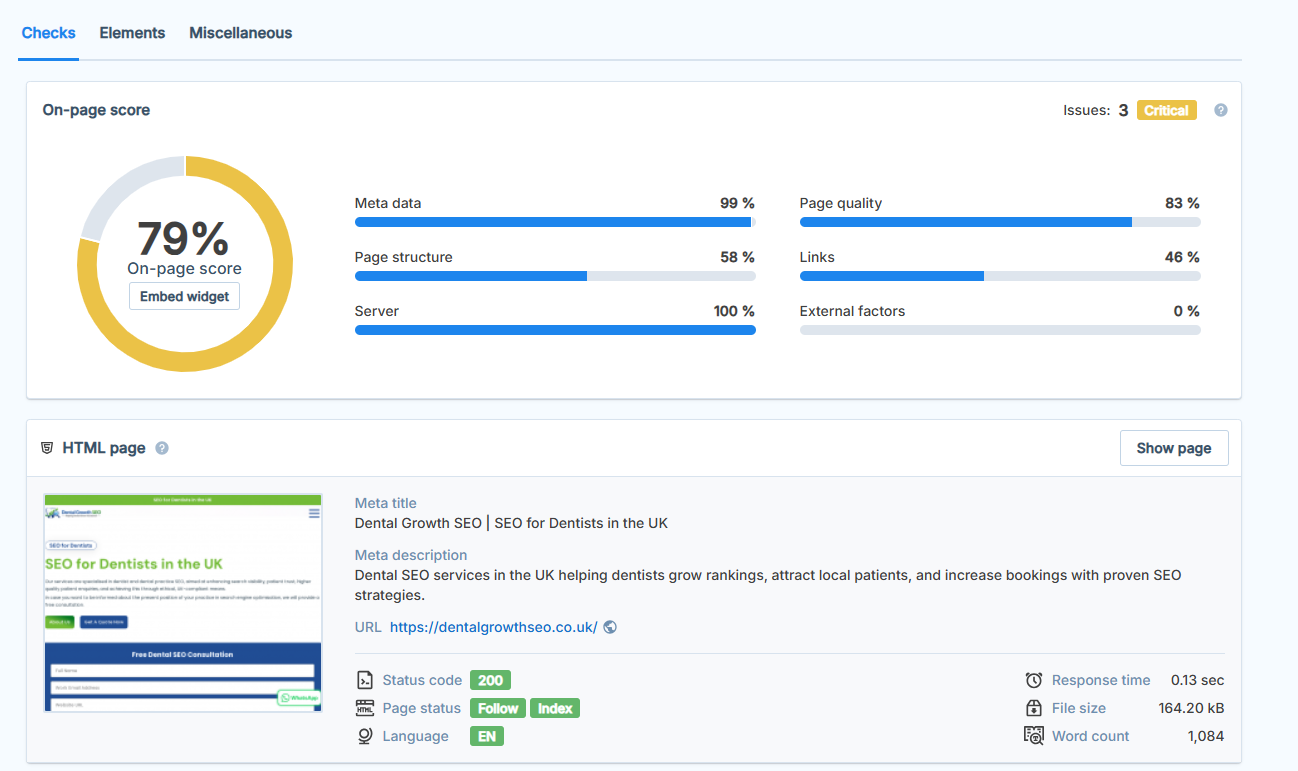
Usually, the title tag is the first piece of information the user reads when looking for a search result.
The following are characteristics of an effective title:
- Include the target keyword naturally.
- Mention the city or location if appropriate.
- Stay within the recommended length.
- Encourage users to click.
The meta description should be a summary of the page with a particular emphasis on the value your patients are supposed to receive.
Why It Matters
Meta descriptions are a direct ranking signal, but they can have a significant impact on click-through rates, generating positive signals about the site to search engines.
6. Publish Helpful, Patient-Focused Content
You can use educational content to answer common questions and show off your expertise.
Topics may include:
- Oral hygiene tips
- Preventive care
- Treatment comparisons
- Recovery guides
- Cost considerations
- Frequently asked questions
Routinely solve actual patient issues, rather than writing for the search engines.
Why It Matters
Patients trust helpful content; it attracts organic traffic, and it helps to guide patients in their decision-making process.
7. Optimise Images for Search and User Experience
Images have to make your website more interesting, but they also have to be well optimised for performance and be accessible in the Attribute and Description for this image.
Best Practices
- Use descriptive file names.
- Add meaningful alt text.
- Compress large image files.
- When possible, select modern image formats.
- Use good images to highlight your clinic, staff and premises.
Why It Matters
Optimised images may result in an improved web page speed, improved accessibility and can also attain better scores for brand visibility with the image search feed and even improved scores on professionalism towards visitors that could be prospective patients.
Frequently Asked Questions (FAQs)
1. For a new dental practice, which is the foremost and crucial SEO strategy?
The biggest and most crucial strategy is a blend of local SEO, a fast website and good content. These components enable your practice to show up in local Google searches and become more reliable for new patients.
2. How to get a new dental practice to rank higher on Google?
Optimise your Google Business Profile, incorporate local keywords, build helpful pages for the services provided, gather patient reviews, and post helpful blog posts frequently to help boost your rank.
3. How long does SEO take to bring new dental patients?
Improvements in the dental practice’s website activity will be apparent within 3-6 months. Iterative optimisation and quality content can result in growth in patients over time.
4. Is local SEO necessary all the time for all dental offices?
Yes. Local SEO improves your practice’s visibility on Google Maps and local search, ensuring you are seen by others in your vicinity. Most patients search for dentists in their local area, so optimising your practice.
5. Can SEO help a new dental practice compete with established clinics?
Absolutely. A new dental private business can conquer the drawback by carefully utilising organic search traffic, building trust and improving online visibility with a well-thought-out SEO strategy.
Read Also: SEO vs Google Ads for Dental Practices in the UK
Final Words
Using these essential SEO strategies is among the best approaches to developing a powerful online identity, along with attracting more local patients for a brand-new dental office. Give all the effort in creating an instant, simply accessible website and aim towards local search, building an informative website, and continuously optimising your website. With the proper strategy and continuous optimisation, your dental practice can be positioned to be on Google page 1, engender trust with patients, and provide your dental office with sustainable and long-term growth.
A fast, mobile-optimized website makes a great first impression and your service pages that are comprehensive, educational and optimize your local keyword make you appear in the search results.