

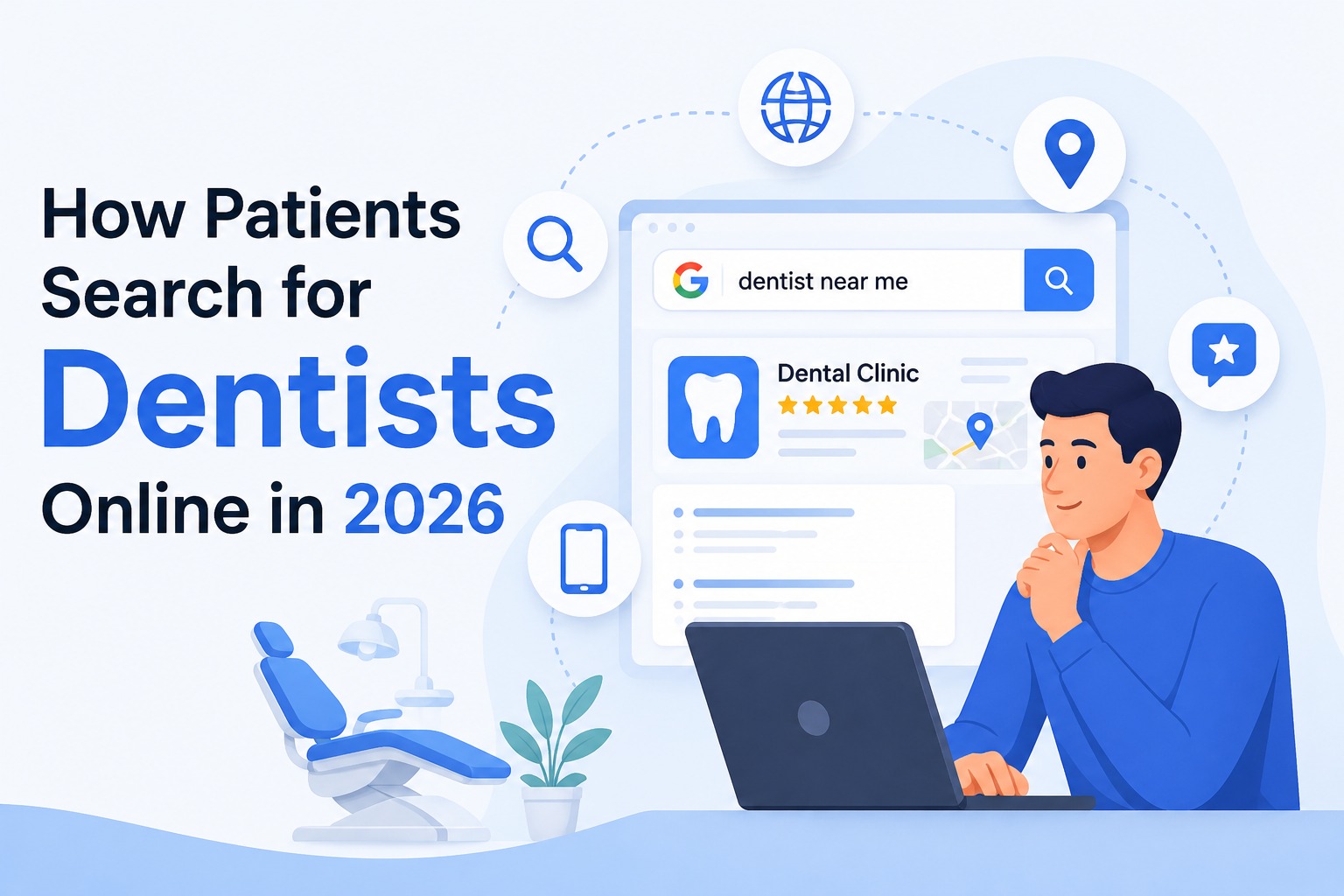
In 2026, most people will be looking up local dental offices via search on Google Maps, mobile search, artificial intelligence-driven search results, online reviews, or voice prompts rather than directly through a business’s website. People start searching for dental services in a whole different way, and the dental offices that don’t get it will miss out on some good bookings to dental offices that excel in online marketing. The Dental clinics that have a ranking on Google achieve more clients than others.
Here is what I will explain in this guide: how people are now searching for dentists online in 2026, what factors determine their choices, and what dental clinics can do to anticipate the search results of the modern-day.
How Patients Use Google to Find Dentists in 2026
They go to Google, Maps, reviews, and voice search them all and pick a dental clinic. They make quick decisions, and decisions that are trustworthy, with a significant playability by online visibility.
Google Maps Searches
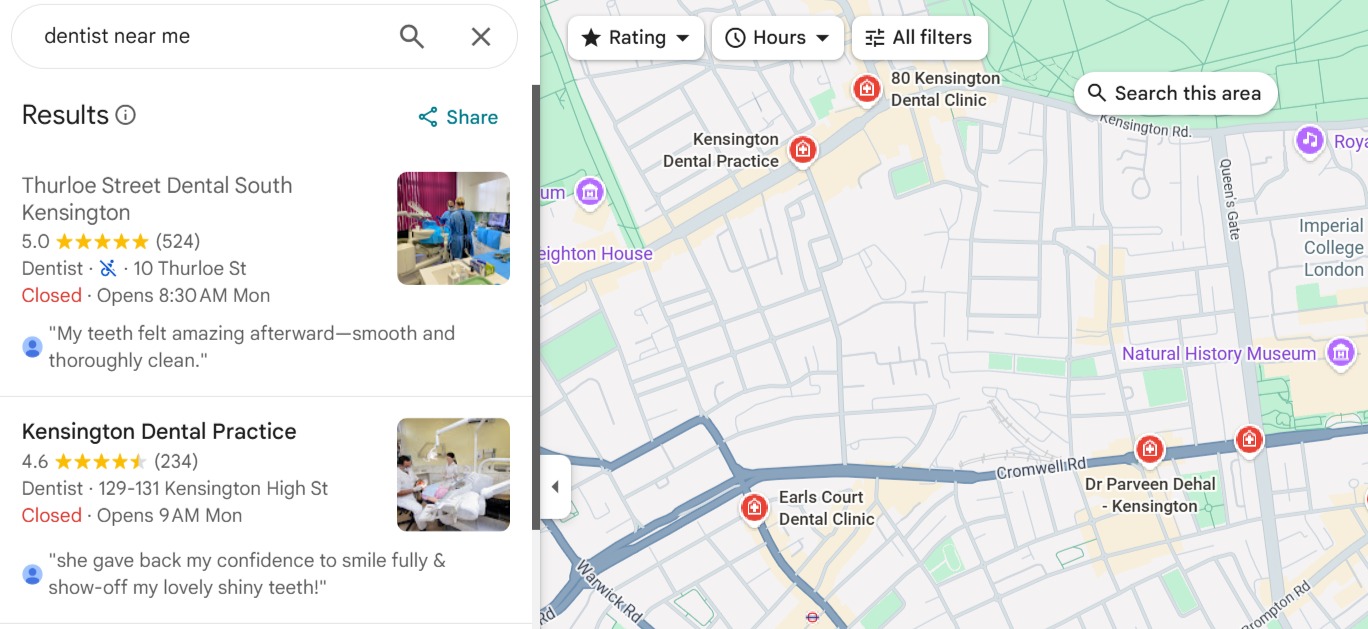
At many times, the first thing they encounter is dental clinics on Google Maps. When patients look up dentists, they typically type “dentist near me” into Google Maps.
- Check reviews and ratings
- View clinic photos
- Compare distance and location
- Check opening hours
- Call directly from Maps
A significant number of patients book without even visiting the website, a more important piece of the puzzle for clinics.
“Dentist Near Me” Searches
Patients use them for:
- Emergency dental care
- Cosmetic treatments
- Invisalign consultations
- Teeth whitening
- Same-day appointments
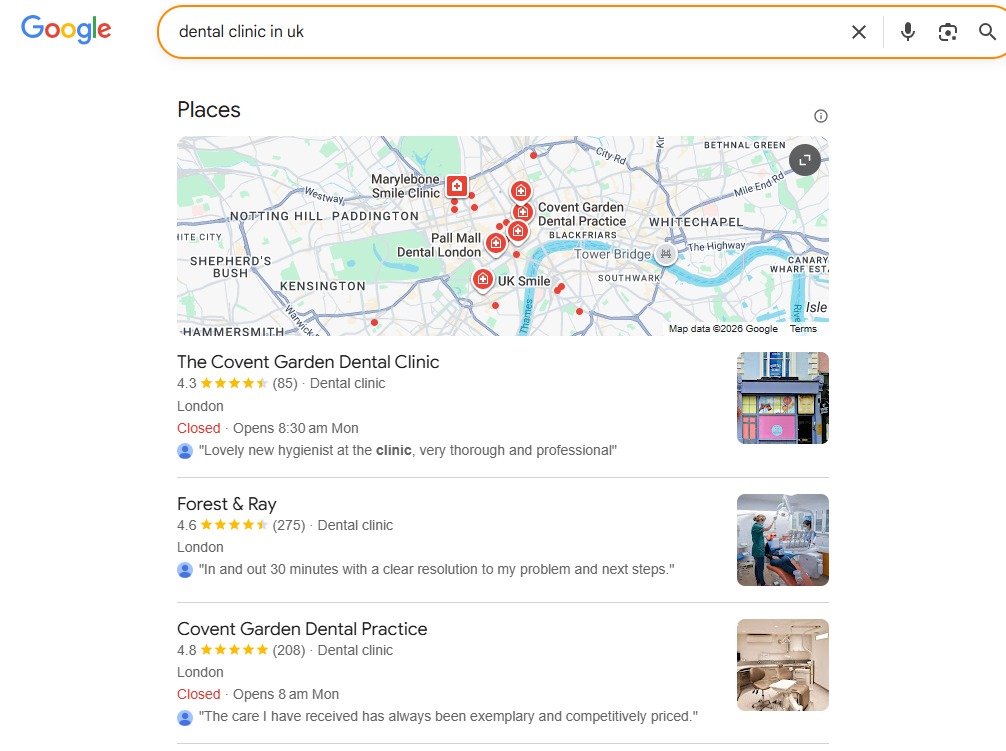
The results that Google can be found from:
- Location proximity
- Review quality
- Service relevance
- Mobile behaviour
This boosts visibility in these high-intent searches, which in turn gives rise to stronger local SEO.
Voice Search Queries
Patients are looking for questions now rather than shorter keywords.
Examples include:
- “Which dentist near me has the best reviews?”
- “Where can I find an emergency dentist tonight?”
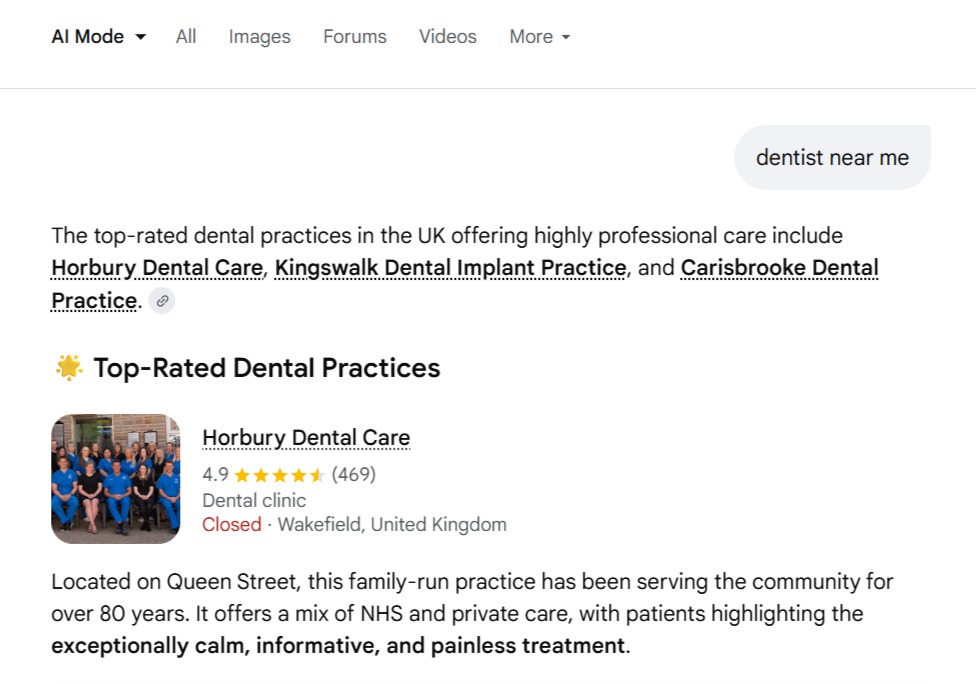
AI Search Results
AI has become a significant contributor in recommending dentists. It is determining clinics’ means of:
- Online reviews and sentiment
- Website quality and authority
- Local SEO strength
- Trust and reputation signals
AI summaries can attract patients when they’re not interested in sifting through web pages, so high online authority is key to being visible.
What Patients Look for Before Booking
However, not getting a high ranking on Google is not all bad, since it’s just part of the equation. The patients must also be confident before they opt for a dental clinic.
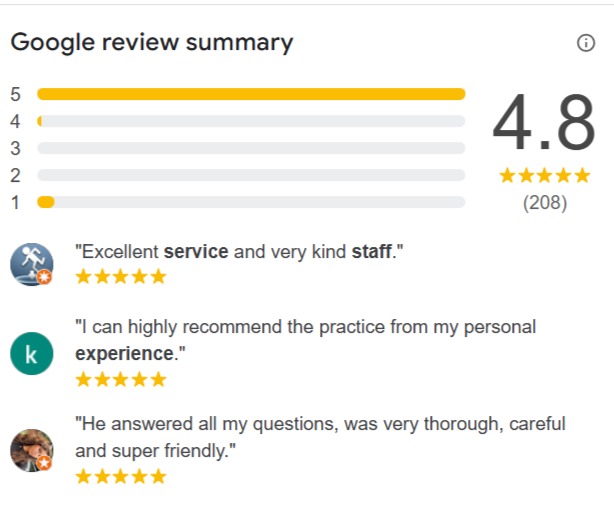
Reviews
One of the most powerful Dental Marketing Trust signals is reviews.
Patients carefully examine:
- Star ratings
- Number of reviews
- Recent patient experiences
- Staff friendliness
- Treatment quality
- Response professionalism
Positive reviews improve:
- Click-through rates
- Trust
- Conversion rates
- Local rankings
Website Quality
Lack of website design scares straight away and negatively affects trust.
Patients expect:
- Fast-loading pages
- Mobile-friendly design
- Clear service information
- Easy navigation
- Online booking options
Even if a dental website is good, but looks outdated or is not very user-friendly, patients tend to bounce after a few seconds.
Mobile Experience
The majority of dental searches are conducted on a mobile device these days.
Patients want:
- Fast websites
- Click-to-call buttons
- Simple navigation
- Quick appointment forms
- Instant information
Google also attaches importance to mobile-first indexing, which means that mobile performance has a direct influence on rankings.
Trust Signals
Patients are extremely careful with respect to their healthcare providers.
Trust signals include:
- Verified reviews
- Professional credentials
- Before-and-after galleries
- Clear clinic information
- Transparent pricing
- Secure websites
- Helpful educational content
Having these trust signals helps transform visitors into patients.
How AI Is Changing Dental Marketing in 2026
Digital marketing is changing the landscape of dental practices’ search engine visibility through AI. Gone are the days when AI was merely keyword-based; nowadays, it also considers overall quality and trust before ranking or recommending a clinic. That includes intent to search, expertise signals, reviews and user behaviour and content depth. This has made it difficult for lower-quality or generic SEO content to remain visible, and helpful, well-structured content that takes the time to be patient and to do well.
How AI Assistants Recommend Dentists
AI has more of a trust signal methodology than a simple keyword match approach in recommending dental clinics. These things are mainly examined by patients, clinics’ reputation, website, and local relevance, content expertise, and user engagement to determine the most reliable clinics.
Mobile Search Behaviour in 2026
Most patients now:
- Search while travelling
- Compare clinics quickly
- Call directly from search results
- Book appointments instantly
That implies successful dental sites need to focus on:
- Speed
- Mobile usability
- Simple layouts
- Clear CTAs
- Fast booking experiences
Mobile-first optimisation is no longer optional.
Frequently Asked Questions (FAQs)
1. How do patients find dentists online in 2026?
There are five primary ways patients are able to find a dentist, the majority of which relate to Google Maps, “dentist near me” search, reviews online, voice search, and AI recommendations.
2. Why are Dental Clinics reliant on Google Maps?
Patients usually come to Google Maps first when they check out a clinic. It displays reviews, scores, images and directions, and lots of patients make contact with clinics.
3. How does AI impact dental SEO?
AI is used to assess content quality, review, website performance and user behaviour. Clinics that are authoritative and offer helpful content are more likely to get ranked by AI-generated search results.
4. Do patients Make Before Booking a Dentist?
Typical indications that patients tend to consider before booking include online reviews, star ratings, near clinic location, clinic website quality, and whether it’s open. The factors for this are trust and convenience.
Final Words
However, patient behaviour when searching for a dentist or Dental Care in 2026 is more advanced, quicker, and more trusted than ever before. The battle between dental practices and ranking isn’t just for the rankings; it’s for engagement on Google Search, Maps, AI results, and review sites. Any practice must understand the trend if they wish to remain visible and gain new patients on a constant basis in such a competitive digital environment.
Vibrant local SEO, compelling content, stellar reviews, and user-friendly websites will keep attracting more visibility and appointments to dental practices.